
Bryan Weeks
- July 31, 2026
Getting to Know Practical Pistol Shooting
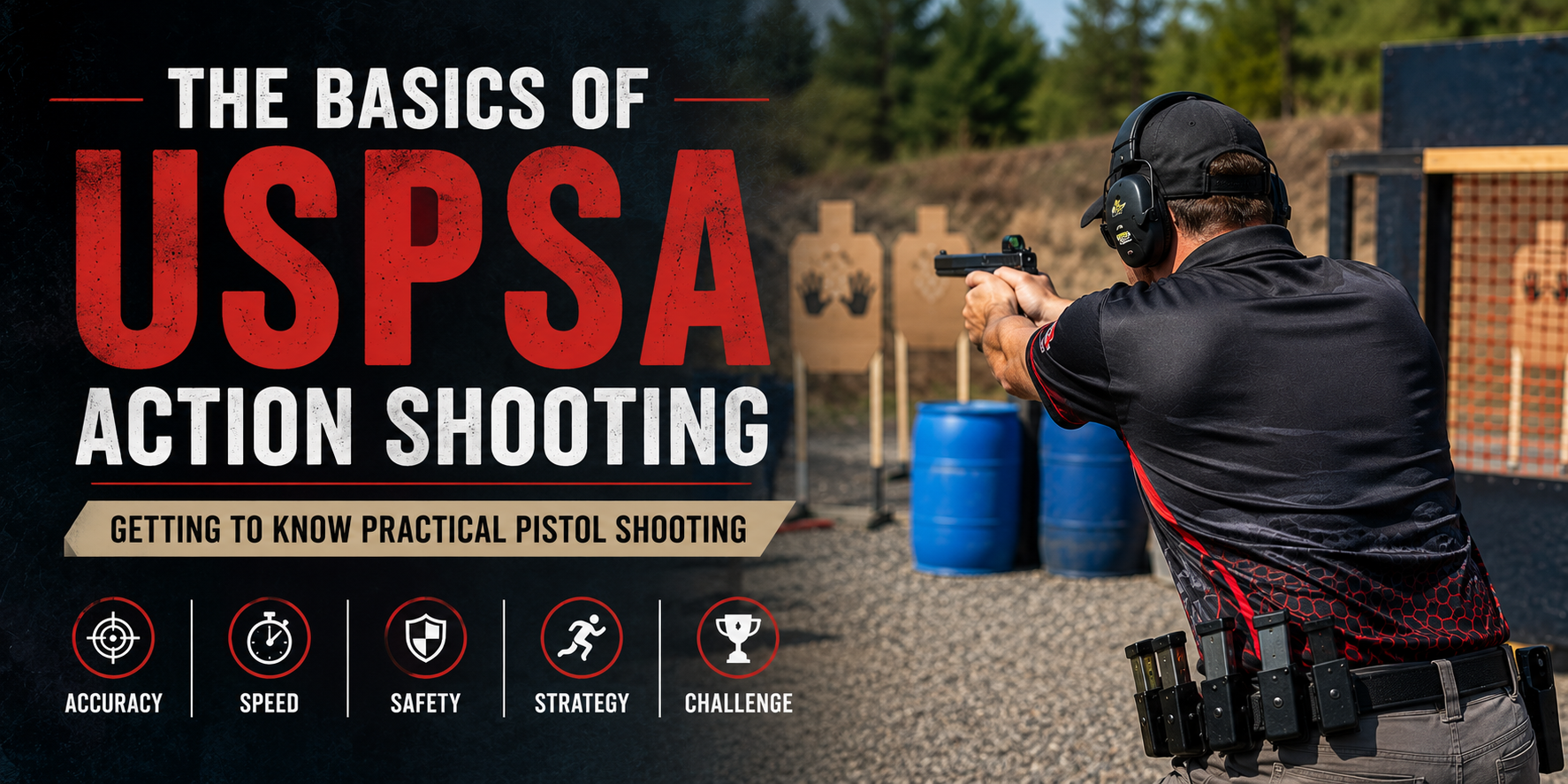
If you've ever watched a competitor move quickly through a course while engaging multiple steel and paper targets with speed and precision, you've likely seen USPSA action shooting in action. Fast-paced, challenging, and incredibly rewarding, USPSA competition has become one of the most popular handgun shooting sports in the United States.
While it may look intimidating at first glance, USPSA is designed to challenge shooters of all skill levels. Whether you're an experienced recreational shooter looking for a new challenge or someone interested in developing practical firearm skills in a structured environment, USPSA offers a welcoming community and a sport that rewards both accuracy and strategy.
What Is USPSA Action Shooting?
USPSA (United States Practical Shooting Association) is a competitive shooting sport that combines speed, accuracy, and problem-solving. Rather than standing in one place and firing at stationary targets, competitors navigate a unique course of fire that requires movement between shooting positions while engaging a variety of targets.
Every stage presents a different challenge. Shooters may need to move through doorways, shoot around barricades, engage steel targets, perform magazine changes, or decide the most efficient route through the course. The objective is simple: score the highest number of points in the shortest amount of time while safely completing the stage.
Unlike many traditional shooting disciplines, USPSA rewards competitors who can balance speed with precision. Shooting too quickly can result in misses or penalties, while moving too slowly costs valuable time. Finding that balance is what makes practical shooting both exciting and endlessly challenging.
Understanding USPSA Divisions
One of the unique aspects of USPSA competition is its equipment divisions. Divisions allow shooters using similar firearms and accessories to compete against one another fairly.
Some of the most common divisions include:
- Production – Designed for stock or minimally modified handguns found on the USPSA approved Production list.
- Carry Optics – Production-style pistols equipped with slide-mounted red dot optics.
- Limited – Iron-sighted pistols with increased magazine capacity and customization options.
- Limited Optics – Similar to Limited but allowing slide-mounted optics.
- Open – Highly customized pistols featuring frame-mounted optics, compensators, even greater magazine capacity, and other performance enhancements.
- Single Stack – Traditional 1911-style pistols using single-stack magazines.
- Revolver – Competition dedicated to double- and single-action revolvers.
- PCC (Pistol Caliber Carbine) – Allows competitors to use pistol-caliber carbines on many of the same courses.
Most new shooters start in Production or Carry Optics using the handgun they already own, making USPSA more accessible than many people realize.
What Equipment Do You Need?
Getting started in USPSA doesn't require a race gun or thousands of dollars in specialized equipment. Many competitors begin with a reliable handgun they already own and add equipment as they gain experience.
A typical beginner's equipment list includes:
- A reliable handgun that meets USPSA division requirements.
- At least three to five magazines.
- A sturdy belt designed to support a holster and magazine pouches.
- A quality outside-the-waistband holster that completely covers the trigger guard and is approved for your division.
- Magazine carriers for quick reloads.
- Eye and ear protection.
- Approximately 150–250 rounds of ammunition for a local match, depending on the number of stages.
Comfortable clothing and athletic shoes are also recommended since you'll spend much of the day walking between stages and moving through courses of fire. As your interest in the sport grows, you can upgrade your equipment, but it's not necessary to be competitive—or to have fun—at your first match.
What to Expect at Your First Match
Your first USPSA competition may seem overwhelming, but most clubs work hard to make newcomers feel welcome.
A typical match begins with registration and a safety briefing before shooters are assigned to a squad. Each squad rotates together through several stages during the day.
Before shooting each stage, competitors are given time to walk through the course and develop a shooting plan. Since every stage is unique, deciding where to move, when to reload, and which targets to engage first becomes part of the challenge.
When it's your turn, the Range Officer will provide commands and start the stage with an audible timer, or possibly a visual or tactile signal. After completing the course, your score is calculated using both your accuracy and the time it took to finish.
Between shooters, competitors help reset the stage by taping targets, repainting steel, and preparing the course for the next shooter. USPSA is known for its friendly atmosphere, and experienced competitors are usually eager to answer questions and help new shooters learn the sport.
How Is USPSA Scoring Done?
USPSA uses a scoring system called Hit Factor, which rewards both speed and accuracy. Your total points earned on the targets are divided by the time it took you to complete the stage, resulting in your Hit Factor score.
Paper targets contain multiple scoring zones, with center hits worth more points than peripheral hits. Steel targets must simply fall to count as a hit. Misses, failure-to-engage penalties, procedural errors, and other rule violations reduce your overall score.
The shooter with the highest Hit Factor on a stage receives the maximum available stage points, while everyone else earns points based on their percentage of that top score. Final match standings are determined by combining the stage points earned across every course of fire.
This scoring method encourages competitors to find the right balance between speed and precision. Shooting faster isn't always better if it comes at the expense of accuracy.
Who Should Try USPSA?
USPSA is suitable for a wide range of shooters. While previous handgun experience is recommended, you do not need to be an expert marksman to enjoy the sport.
The ideal new competitor should already have a solid understanding of firearm safety, be comfortable handling and operating their handgun, and consistently demonstrate safe muzzle control and trigger discipline. Many clubs recommend that shooters have experience drawing from a holster, performing reloads, and hitting targets accurately at typical pistol distances before attending their first match.
If you aren't quite there yet, participating in handgun fundamentals classes or practice sessions is an excellent way to build confidence before competing. In most cases, clubs will require you to take a new shooter safety course before you can participate in any practice sessions for USPSA action shooter training.
The safety course will teach you about the rules of USPSA action shooter, safety considerations on the range, scoring and more. They will also have a practical component of the training for you to demonstrate your ability to safely handle and shoot your firearm.
USPSA welcomes everyone from recreational shooters and concealed carry permit holders to law enforcement officers and seasoned competitors. The sport offers enough variety and challenge that even experienced shooters continue learning with every match.
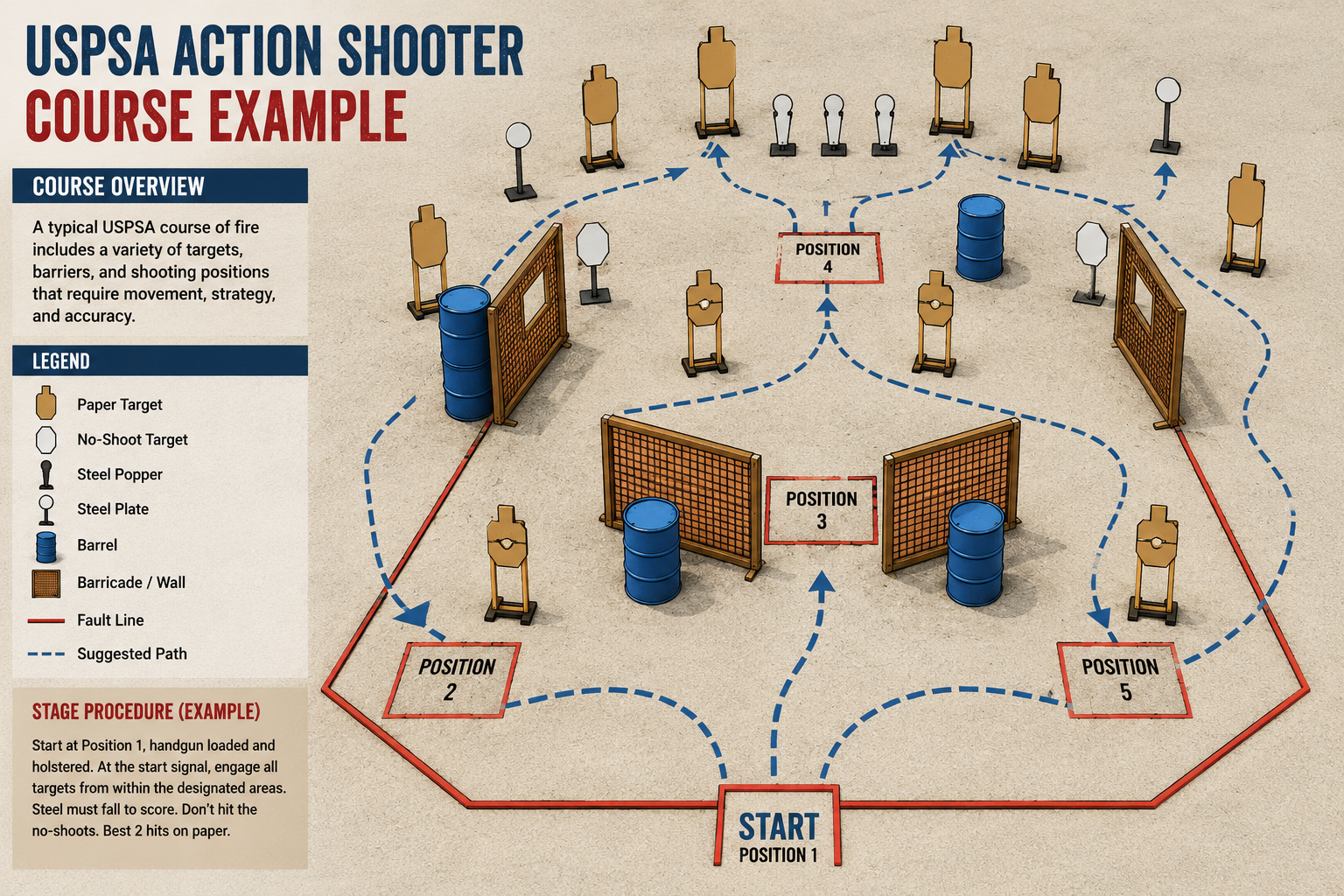
What Does a USPSA Course of Fire Look Like?
Every USPSA stage is different, which keeps the sport fresh and exciting. A course of fire may require competitors to engage paper targets, knock down steel plates, shoot through ports or windows, move between multiple shooting positions, or fire from behind barriers.
Stages are carefully designed to test a variety of shooting skills, including:
- Target transitions
- Movement while maintaining firearm control
- Reload efficiency
- Accuracy at varying distances
- Stage planning and decision-making
Some stages are short "speed shoots" consisting of only a handful of targets, while others are larger field courses requiring dozens of rounds and multiple movement sequences. No two matches are exactly alike, and even experienced competitors are continually adapting to new stage designs.
Ready to Give It a Try?
USPSA action shooting combines athletic movement, precision shooting, and strategic thinking into one exciting sport. Every match offers a new set of challenges, making it just as engaging for first-time competitors as it is for national champions.
If you're comfortable handling a handgun safely and are looking for a fun way to improve your shooting skills, your local USPSA club is a great place to start. You'll find a supportive community, plenty of opportunities to learn, and a competition that rewards practice, preparation, and safe firearm handling.
Whether your goal is to become a serious competitor or simply enjoy a new shooting discipline, USPSA offers an exciting next step in your shooting journey.
Check out more about the USPSA Action Shooter program at LPRG! Our crew would love to see you!