
- August 20, 2026
Understanding the fundamentals of the sport of trap
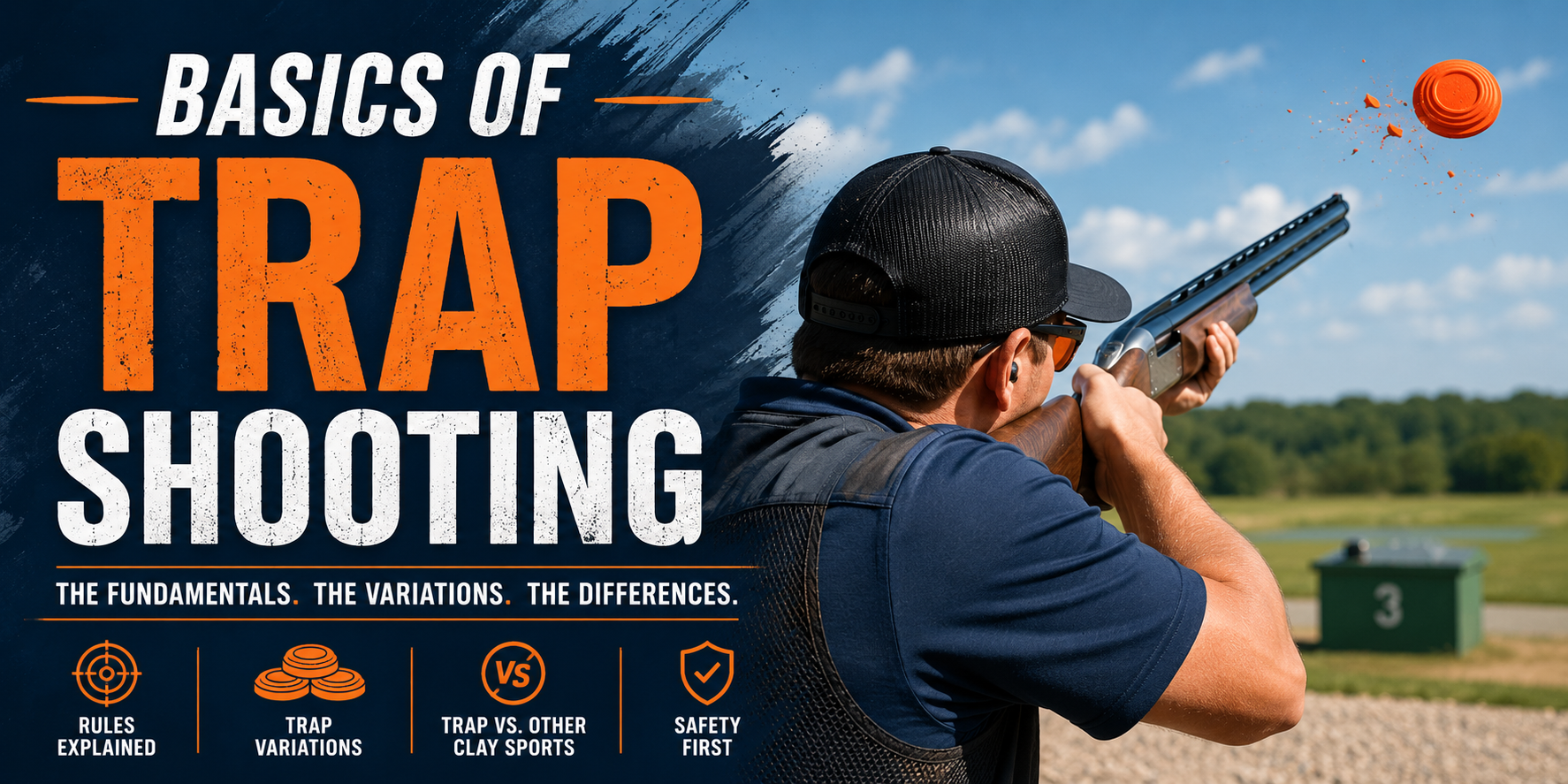
Trap shooting is one of the most popular shotgun sports in North America and around the world. It combines concentration, hand-eye coordination, consistency, and safe firearm handling into a challenging and rewarding recreational activity. Whether you're interested in casual weekend shooting, league competition, or tournament participation, understanding the fundamentals of trap shooting can help you get started on the right foot.
At its core, trap shooting is a clay target sport in which participants use shotguns to break flying clay targets launched from a machine. While the basic concept is simple, the sport offers a variety of formats and levels of difficulty that appeal to shooters of all experience levels.
What Are the Rules of Trap Shooting?
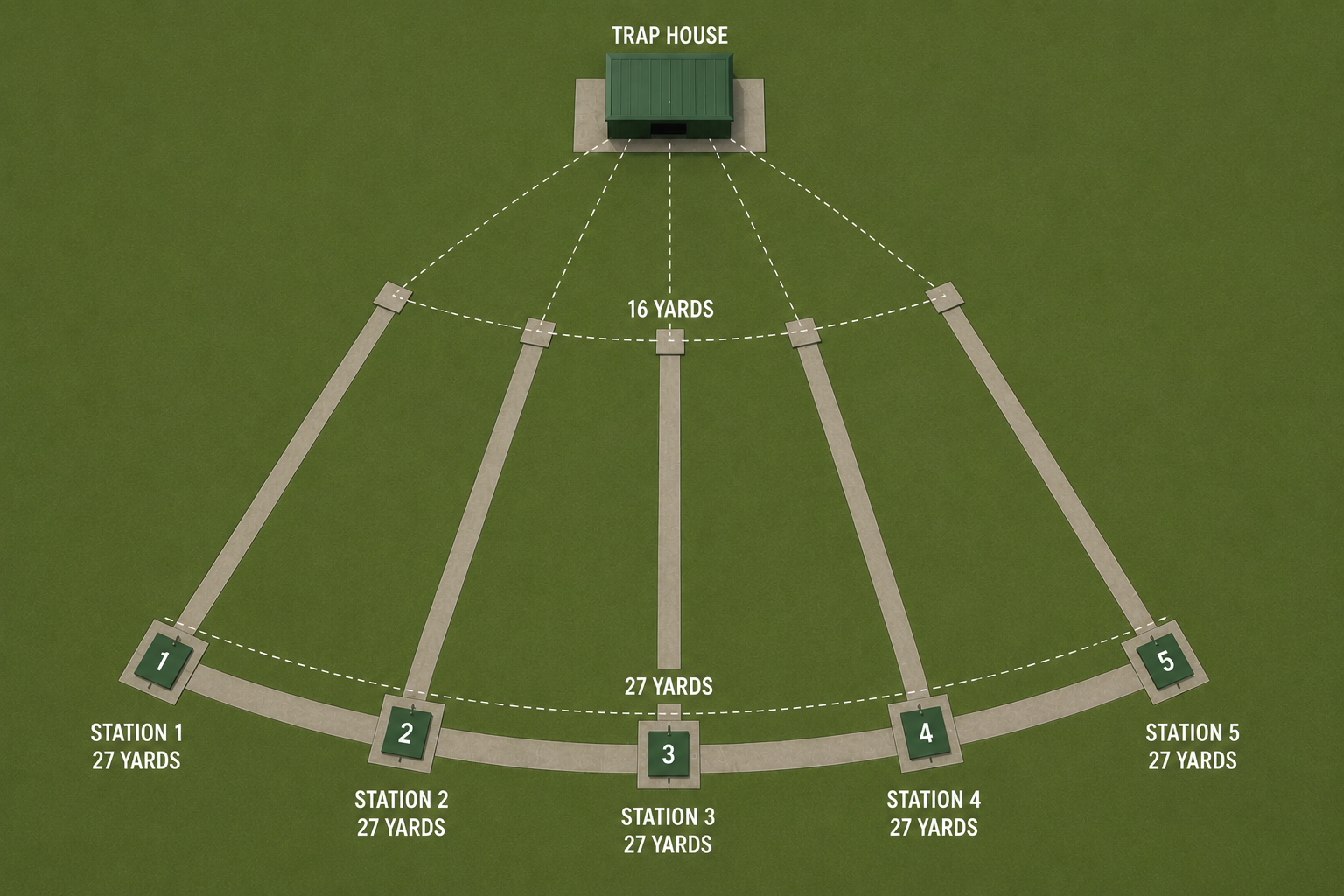
In standard American trap shooting, shooters stand at one of five shooting stations positioned in an arc from 16 to 27 yards behind the trap house. The trap house contains a machine that launches clay targets away from the shooters at varying horizontal angles.
A regulation round consists of 25 targets. Shooters rotate through all five stations, shooting at five targets from each position. After firing at a target, shooters wait for the rest of their squad to shoot before moving to the next station when appropriate.
In singles trap, each shooter is presented with one target at a time and is allowed only one shot to break it. Targets are released after the shooter calls for the bird. Since the target angle is unknown until it appears, shooters must react quickly and maintain proper technique throughout the shot.
Safety is a critical component of the sport. Shooters must keep their firearms pointed downrange, keep actions open when not shooting, and follow all range commands and local regulations.
Scoring is straightforward. One point is awarded for each target that is visibly broken. A perfect score is 25 out of 25, while competitive events often involve multiple rounds where shooters may face 100, 200, or even more targets over the course of a tournament.
Common Variations of Trap Shooting
While singles trap is the most widely recognized format, several variations exist that introduce different challenges and skill requirements.
Singles Trap
Singles trap is the foundation of the sport and the best place for beginners to start. One target is launched at a time, and the shooter takes a single shot. Because the target is moving away from the shooter, success depends on maintaining a smooth gun mount, proper follow-through, and consistent target acquisition.
Most recreational leagues and introductory programs focus on singles trap because it allows shooters to develop core skills before moving on to more advanced disciplines.
Doubles Trap
Doubles trap increases the challenge by launching two targets simultaneously. The shooter must engage both targets in quick succession, typically firing one shot at each target.
This format demands faster target recognition, efficient gun movement, and the ability to transition smoothly from the first target to the second. Many experienced trap shooters enjoy doubles because it tests both speed and accuracy.
Wobble Trap
Wobble trap adds a significant level of unpredictability to the game. Unlike standard trap machines that launch targets within a relatively consistent range of trajectories, wobble trap machines vary both horizontally and vertically.
Targets may appear higher, lower, faster, or at wider angles than expected. This variation forces shooters to react quickly and adapt to constantly changing target presentations, making it an excellent training tool for improving reflexes and target-reading skills.
Continental Trap
Continental trap is a popular international variation that combines elements of traditional trap and Olympic-style competition. Targets are generally faster and can be thrown at wider angles than those found in standard American trap.
Shooters are often allowed two shots per target, but the increased speed and difficulty still make the discipline highly challenging. Continental trap is especially popular among shooters looking to expand their experience beyond traditional American formats.
Trap vs. Other Clay Target Sports
Although trap shooting is one of the most recognizable clay target disciplines, several other shotgun sports offer unique challenges and shooting experiences.
Trap Shooting
In trap shooting, targets move generally away from the shooter from a single trap house. The primary challenge lies in reacting to unknown target angles while maintaining smooth and consistent gun movement.
Skeet Shooting
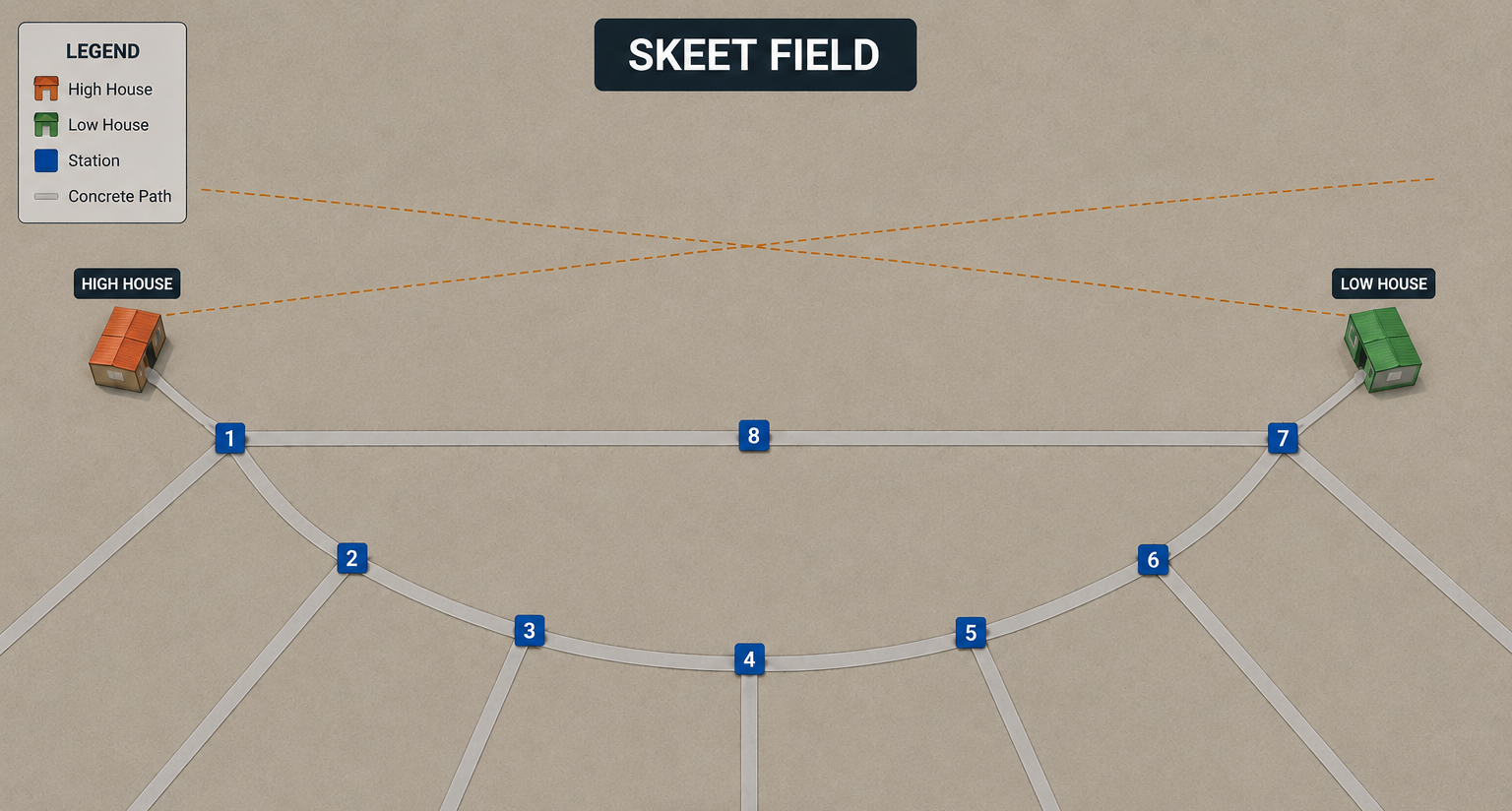
Skeet shooting differs significantly from trap. Instead of moving away from the shooter, targets cross in front of the shooter from two houses positioned at opposite ends of a semi-circular field.
Shooters move through eight stations around the field and encounter a variety of crossing target presentations. Skeet emphasizes timing, lead, and precise target tracking.
Olympic Bunker Trap
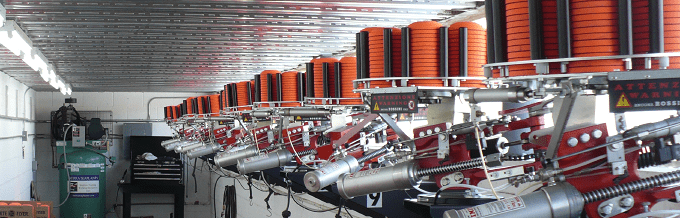
Olympic bunker trap is considered one of the most demanding clay target disciplines in the world. Shooters face extremely fast targets launched from multiple trap machines hidden within a bunker.
Target angles are more extreme than those found in American trap, and shooters have less time to react. Olympic bunker trap requires exceptional concentration, refined technique, and quick decision-making.
The Olympic Bunker at LPRG is a great challenge for anyone who wants to grow their shooting skills! Our 15 trap machines are ready for you to check it out!
5-Stand
5-Stand combines elements of trap, skeet, and sporting clays into a compact shooting format. Shooters rotate among five stations and encounter a wide variety of target presentations.
Depending on the course setup, targets may be crossing, incoming, outgoing, overhead, or rolling along the ground. Because every station can offer different target combinations, 5-Stand keeps shooters engaged and continuously adapting.
Sporting Clays
Often referred to as "golf with a shotgun," sporting clays is designed to simulate real-world hunting situations through diverse and challenging target presentations. Rather than shooting on a fixed field, participants move through a course consisting of multiple stations, each featuring unique target trajectories.
Targets may cross from left to right, fly overhead, approach the shooter, move away, or even roll along the ground as "rabbit" targets. Shooters frequently encounter both single targets and pairs, requiring strategic planning as well as shooting skill.
A sporting clays course typically includes 50 to 100 targets and offers tremendous variety from station to station. Because no two presentations are exactly alike, sporting clays places a strong emphasis on adaptability, target reading, and shot execution.
Final Thoughts
Trap shooting remains one of the most accessible and enjoyable shotgun sports available today. Its straightforward rules make it easy for newcomers to learn, while its competitive nature provides endless opportunities for improvement. Whether participating in singles, doubles, wobble trap, or continental trap, shooters can continually refine their skills and challenge themselves in new ways.
Understanding the differences between trap, skeet, Olympic bunker trap, 5-Stand, and sporting clays can also help shooters explore other disciplines and discover which formats they enjoy most. Regardless of the discipline chosen, clay target sports offer a fun, social, and rewarding way to develop marksmanship, focus, and confidence on the range.
If you want to learn how to shoot trap, we highly encourage you to explore firearms training at LPRG! Our experienced instructors will give you the skills you need to enjoy this great sport!