
- August 25, 2026
Everything you need to know, but didn't know to ask!
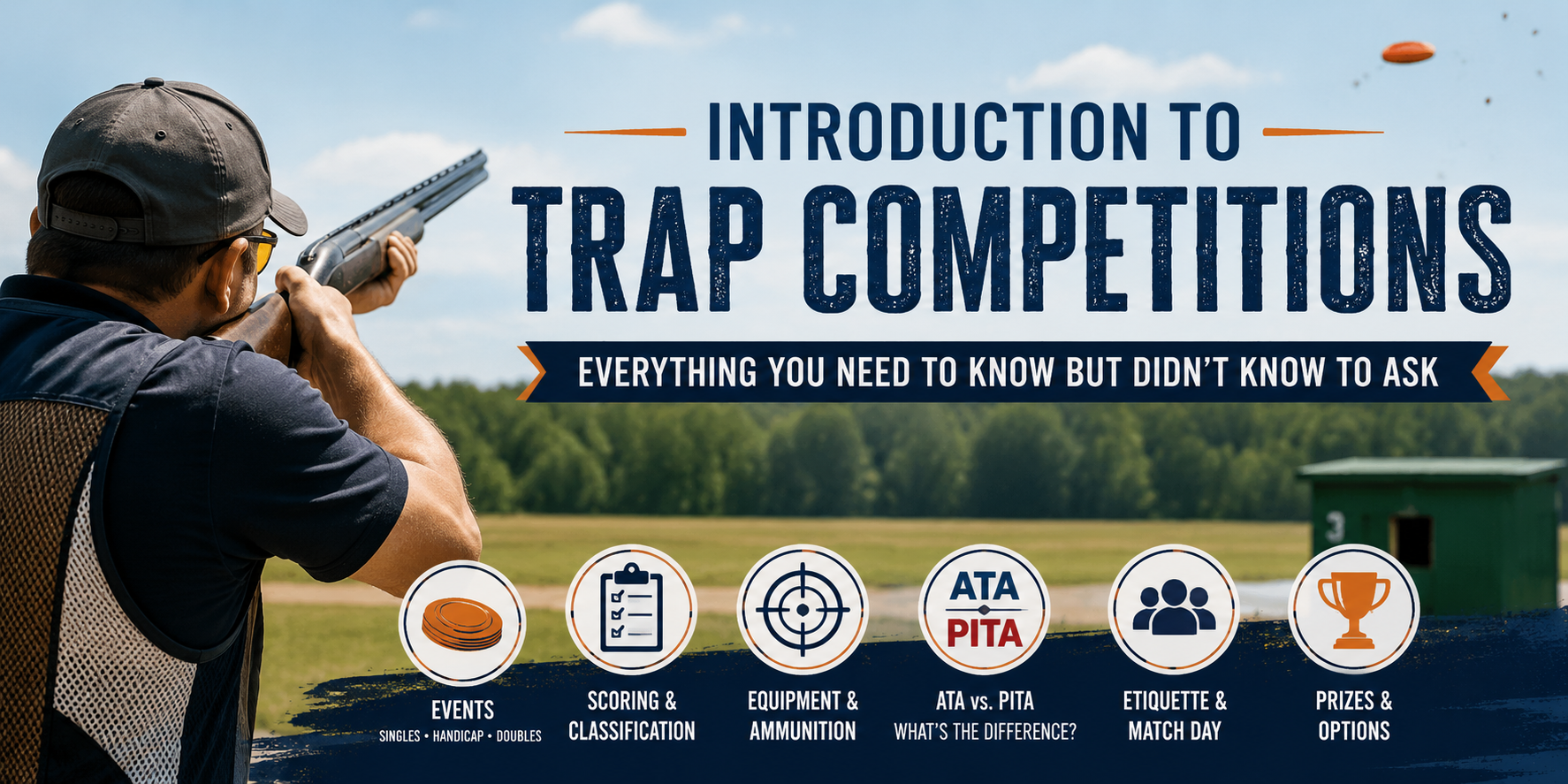
If you've spent any time shooting trap recreationally, you've probably wondered what it would be like to participate in a competition. The good news is that trap competitions are welcoming, organized, and designed to allow shooters of all skill levels to compete fairly. Whether you're looking to challenge yourself, meet fellow shooters, or track your improvement over time, understanding how competitions work can make your first event much less intimidating.
Competitive trap shooting involves much more than simply breaking targets. Shooters participate in different event formats, compete within classifications and handicap systems, manage squad assignments, and often have opportunities to participate in optional prize programs. Understanding these elements before attending your first registered shoot will help you feel prepared and confident on the line.
Types of Trap Competitions
Most registered trap competitions feature three primary disciplines: Singles, Handicap, and Doubles.
Singles events are shot from the 16-yard line. Each shooter receives one target at a time, and all competitors shoot from the same distance. Singles is often where new competitors begin because it closely resembles recreational trap shooting.
Handicap events are designed to level the playing field between shooters of different skill levels. Competitors shoot from distances ranging from 19 to 27 yards behind the trap house. More experienced and successful shooters are assigned farther yardages, making the targets more challenging.
Doubles events present two targets simultaneously from the trap house. Shooters must break both targets, requiring faster target acquisition, smooth gun movement, and strong shooting fundamentals.
Many tournaments include all three disciplines, while smaller events may focus on one or two.
Understanding Yardage and Handicap
One of the most unique aspects of trap competition is the handicap system. Unlike many sports where competitors are divided solely by skill classification, trap shooting also uses distance to create a more balanced competition.
New shooters typically begin at shorter handicap yardages. As they achieve success in registered events, they may earn "yardage punches," which move them farther from the trap house. The farther back a shooter stands, the more difficult the target presentation becomes.
The maximum handicap distance is 27 yards. Reaching the 27-yard line is considered a significant achievement within the sport and is often viewed as a milestone among competitive shooters.
Scoring and Classification
Trap scoring is straightforward: a broken target earns one point, and a missed target earns zero points.
Most events consist of 100 targets, typically shot in four rounds of 25. Perfect scores are possible, and at larger tournaments, ties among top shooters are common.
To ensure fair competition, shooters are also grouped into classifications based on their performance history. Common classes include AA, A, B, C, and D, though classifications may vary slightly depending on the governing organization and event format.
This system allows newer shooters to compete against others of similar ability while still participating in the same event as highly accomplished competitors.
Equipment and Ammunition
One of the best things about trap shooting is that you don't need specialized equipment to get started in competition.
Most competitors use 12-gauge shotguns, although other gauges may be permitted depending on the event. Popular choices include break-action over/under shotguns and single-barrel trap guns designed specifically for the sport.
Key equipment considerations include:
- A properly fitted shotgun
- Eye and ear protection
- A shooting vest or shell pouch
- Reliable target loads
- Spare choke tubes and accessories
Many successful shooters begin competing with the same firearm they use for recreational trap. While specialized equipment can offer advantages, consistent fundamentals matter far more than expensive gear.
ATA vs. PITA: Understanding the Governing Bodies
In North America, two major organizations oversee registered trap shooting competitions: the Amateur Trapshooting Association (ATA) and the Pacific International Trapshooting Association (PITA).
The ATA is the largest trapshooting organization in the United States (in the world, actually) and sanctions thousands of registered events each year. It establishes rules, maintains shooter records, assigns classifications, and manages handicap yardage.
PITA primarily serves shooters in the western United States and Canada. While its target presentations and competition structure are very similar to ATA events, PITA maintains its own membership system, records, classifications, and handicap management.
For most shooters, the experience of participating in ATA and PITA competitions is remarkably similar. The primary differences involve administrative procedures, membership requirements, and how performance records are maintained.
Before entering a registered competition, it's worth confirming which organization sanctions the event so you can ensure your membership and classification information are current.
Competition Etiquette
Trap shooters are known for maintaining a strong tradition of sportsmanship and safety.
Some basic etiquette guidelines include:
- Keep conversations to a minimum while competitors are shooting.
- Remain still when another shooter is calling for a target.
- Always keep firearms pointed in a safe direction.
- Follow the instructions of the scorer and shoot management staff.
- Be ready when it's your turn to shoot.
Observing experienced squads for a few minutes before your event can help you become familiar with the flow of competition and reduce first-day nerves.
What to Expect on Match Day
Most competitions begin with registration, squad assignment, and a review of the day's schedule.
When your squad is called, you'll proceed to your assigned trap field and rotate through the five shooting stations. After each round of 25 targets, shooters verify scores before moving to the next field or event.
Expect some downtime between events, especially at larger shoots. Many competitors use this time to socialize, review scores, or prepare equipment for the next discipline.
The atmosphere at most clubs is welcoming, and experienced shooters are often happy to answer questions from newcomers.
Registration Information and Buy-In Options
One aspect of trap competitions that can seem confusing to new shooters is the registration process and the various options available when entering events.
What is Pre-Squadding?
Many larger competitions offer pre-squadding, which allows shooters to reserve their squad positions and shooting times before arriving at the event. Pre-squadding is especially popular at state shoots, satellite grands, and major tournaments where hundreds of competitors may be participating.
By pre-squadding, shooters can:
- Reserve preferred shooting times
- Shoot with friends and regular squad mates
- Better plan travel and lodging arrangements
- Avoid limited squad availability on the day of the event
Some clubs allow online pre-squadding, while others accept reservations by phone, mail, or email. Smaller local shoots may not offer pre-squadding at all and instead assign squads during registration.
Event Entry Fees and Buy-In Options
Every registered event includes an entry fee that covers targets, administration, and sanctioning fees. Beyond the basic entry fee, many competitions offer optional purses and special programs that allow shooters to compete for cash awards or additional prizes.
Common options include:
Lewis Class Purse – One of the most popular options for shooters of all skill levels. Scores are grouped after the event, and prize money is distributed across several score brackets. This gives average shooters a realistic chance of winning money even when competing against highly skilled competitors.
50/50 Purse – A portion of the entry fees is paid back to shooters who finish near the top of the event standings.
Class Purse – Shooters compete against others in their classification, such as AA, A, B, C, or D class.
Yardage Purse – Handicap shooters compete against others within similar yardage groups.
Additional Options – Some clubs and tournaments offer additional voluntary prize pools that reward high scores. The format varies by event.
Participating in these options is entirely voluntary. Many new competitors choose to enter only the main event during their first few shoots while they become familiar with the competition process.
Trophies, Awards, and Prize Money
Prizes vary widely depending on the size and prestige of the tournament.
Local club shoots may award:
- Trophies
- Plaques
- Shooting accessories
- Gift certificates
- Club merchandise
Larger state and regional tournaments often award:
- Championship trophies
- Buckles
- Jackets
- Commemorative awards
- Significant cash payouts through purses and options
Major events may distribute tens of thousands of dollars in prize money over the course of a tournament.
It's important to remember that most competitors participate for the challenge, camaraderie, and personal achievement rather than the prizes. While winning awards is certainly exciting, many shooters consider breaking a personal-best score or earning additional handicap yardage to be just as rewarding.
Before entering any event options, take a few minutes to review the tournament program. The cashier or shoot management team can explain the available purses, how payouts work, and which options may be best suited for your experience level.
Tips for First-Time Competitors
Your first competition should focus on learning rather than winning.
A few helpful suggestions include:
- Arrive early.
- Bring more ammunition than you think you'll need.
- Introduce yourself to your squad members.
- Pay attention to squad rotation procedures.
- Stay hydrated, especially during summer events.
- Focus on one target at a time.
Most importantly, don't let nerves affect your enjoyment. Every experienced competitor remembers being a first-time shooter, and the trapshooting community is generally supportive of newcomers.
Final Thoughts
Competitive trap shooting offers an excellent opportunity to improve your skills, meet fellow shooters, and enjoy a structured challenge.
Understanding the different event types, scoring systems, handicap yardages, governing organizations, competition etiquette, pre-squadding procedures, and prize options will help you arrive prepared and confident.
The best way to learn is to participate. Sign up for a local registered shoot, ask questions, and enjoy the experience. You may discover that competition trap shooting becomes one of the most rewarding parts of the sport.
If you would like to participate in any of the upcoming events at LPRG, check out
our Events page. The full year trap competition schedule is posted and updated regularly. Don't hesitate to give us a call for more information!